
Home Rehab Training with an Exercise Specialist (RTES)
Home / Home Rehab Training with an Exercise Specialist (RTES)
Home Rehab Training with an Exercise Specialist (RTES)
Home / Home Rehab Training with an Exercise Specialist (RTES)
Why Home Rehabilitation Matters
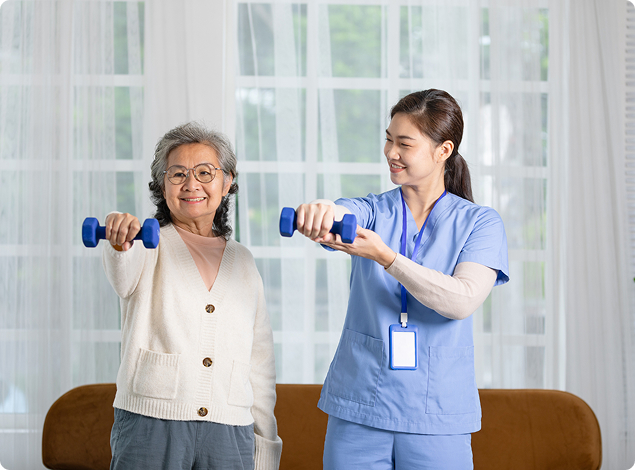
Home rehabilitation is essential because it allows patients to recover in their actual living environment. By practicing exercises at home, skills they can immediately apply in their daily activities. This real-world application helps them master movements needed for daily tasks within the specific constraints of their home layout.
The convenience of home rehabilitation significantly boosts exercise compliance. Without needing to travel or schedule appointments, patients can perform their exercises more regularly, fitting them in between other daily responsibilities. This consistency is crucial for building strength and regaining function effectively.
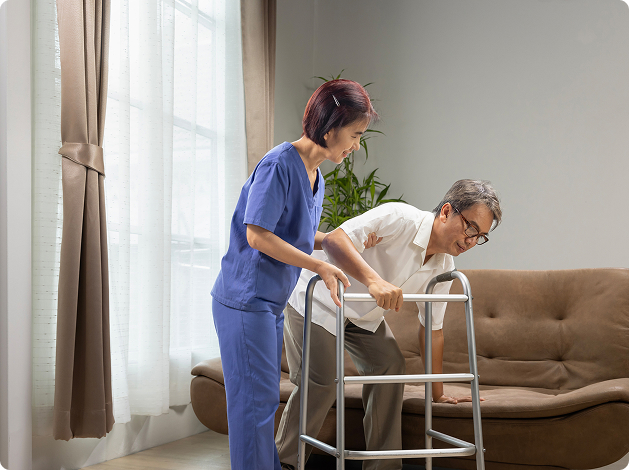
Healing in a familiar space reduces stress and creates psychological comfort, which positively affects recovery. The brain forms stronger connections when learning movements in relaxed, recognizable surroundings, potentially accelerating neurological adaptation.
Perhaps most importantly, home rehabilitation gives patients control over their recovery journey. As they successfully manage their exercises independently, they gain confidence in their ability to meet physical challenges. This sense of capability often motivates patients to stay committed to their recovery long-term, even after formal rehabilitation ends.
Clinic/Gym vs. Home Rehabilitation: A Comparison
| Aspect | Clinic/Gym Rehabilitation | Home Rehabilitation |
|---|---|---|
| Setting Assessment | Generic environment not matched to patient's daily reality | Therapists can evaluate actual living environment and suggest practical modifications |
| Equipment | Access to specialized equipment | Uses household items and minimal specialized equipment |
| Contextual Learning | Skills must transfer from clinical to home setting | Direct learning in the environment where skills will be used |
| Safety Evaluation | Cannot identify home-specific hazards | Allows therapists to identify and address real environmental risks |
| Family Involvement | Limited family participation | Family can learn and assist in proper technique |
| Adherence | Affected by transportation, scheduling, and motivation | Higher completion rates due to convenience and integration with daily life |
| Space Adaptation | Patient must adapt clinic learnings to home | Exercises designed specifically for patient's living space |
How Home Rehabilitation Is Set Up
ASSESSMENT PHASE
- Home environment evaluation
- Identification of risk factors
- Spatial measurement
- Family capability assessment
ADAPTATION PLANNING
- Environmental modifications
- Equipment recommendations
- Exercise space designation
- Support system engagement
IMPLEMENTATION PHASE
- Exercise program customization
- Safety protocol establishment
- Progress tracking mechanisms
- Follow-up schedule creation
EVALUATION CYCLE
- Regular in-home reassessment
- Program adjustment
- Milestone celebration
- Independence progression
contact us
We’re here to help you choose the right path to recovery
- hometherapy.sg
- +65 8511 1904
- 3 Tampines Central 1, # 04-02, Singapore 529540
- enquiry@hometherapy.sg
