Differences Between Therapists & Specialists
Home / Differences Between Therapists & Specialists
Differences Between Therapists & Specialists
Home / Differences Between Therapists & Specialists
Understanding Different Home Health Services
When looking at recovery options that come to your home, it’s important to know how Home Physiotherapy, Home Rehabilitation Training with Exercise Specialists (RTES), and Home Functional Training with Personal Functional Trainers (PFT) differ from each other.
Home Physiotherapy
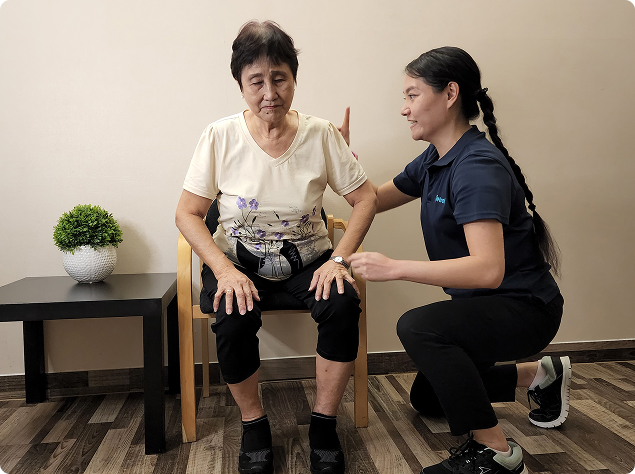
Home Physiotherapy is the most medical of these services. Physiotherapists have university degrees and medical training that allows them to diagnose problems and create treatment plans. They use hands-on techniques, specialized equipment, and exercise guidance. Their work connects directly with your doctor’s care plan, and they can provide official medical documentation for insurance purposes.
Home Rehab Training with a Exercise Specialist (RTES)
Home Rehabilitation Training with an Exercise Specialist offers a middle ground. These professionals understand both medical recovery principles and fitness concepts. They focus on creating exercise routines specifically designed to help you recover from injuries or surgeries. While they can’t diagnose conditions or perform hands-on therapy techniques, they excel at designing exercise programs that gradually help you regain your abilities and independence.
Home Functional Training with a Personal Functional Trainer (PFT)
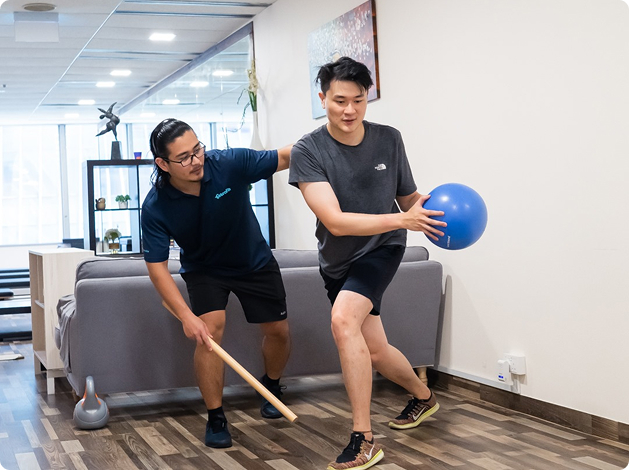
Home Functional Training with a Personal Functional Trainer is more fitness-focused. These trainers specialize in teaching everyday movement patterns and building practical strength. They work best with people who have already completed their medical recovery and now want to strengthen their bodies for daily activities. They focus on movements that mimic real-life actions rather than isolated exercises, helping you prevent future injuries and function better in your daily life.
All three services happen in your home environment and typically last about an hour per session, but they serve different stages in the recovery journey and require different professional qualifications.
Comparative Chart of Home-Based Health Services
| Feature | Home Physiotherapy | Rehab Training Exercise Specialist (RTES) | Personalised Functional Training (PFT) |
|---|---|---|---|
| Primary Focus | Clinical assessment, diagnosis, and treatment of physical dysfunction | Structured exercise progression focused on rehabilitation goals | Functional movement patterns and strength for daily activities |
| Provider Qualifications | Licensed physiotherapist with Bachelor's/Master's degree in Physiotherapy | Exercise specialist with rehabilitation certification/education | Personal trainer with functional training certification |
| Medical Integration | High - works within medical system, physician referrals common | Moderate - may receive referrals from medical providers | Limited - typically works outside medical system |
| Assessment Approach | Comprehensive physical examination, diagnostic testing | Functional assessment, movement screening | Movement pattern analysis, fitness evaluation |
| Treatment Methods | Manual therapy, therapeutic modalities, exercise prescription, education | Therapeutic exercise, corrective movement patterns, home equipment adaptation | Functional movement training, progressive strength building |
| Documentation | Formal medical documentation, treatment plans, progress notes | Structured exercise programs, progress tracking | Basic training logs, general progress notes |
| Insurance Coverage | Often covered by health insurance | Sometimes covered, depending on provider credentials | Rarely covered by health insurance |
| Equipment Used | Medical devices, specialized therapy tools | Rehabilitation-specific equipment, adapted household items | Functional training tools, bodyweight exercises |
| Client Population | Patients with acute injuries, post-surgical, medical conditions | Individuals transitioning from medical care to independence | Generally healthier individuals focusing on function and fitness |
| Goal Setting | Clinically defined outcomes, pain reduction, restoration of function | Progressive rehabilitation goals, return to specific activities | Performance improvement, functional strength, injury prevention |
A Complementary Approach to Home-Based Rehabilitation
How Our Services Work Together
Home Physiotherapy serves as the critical first step in the rehabilitation process. Our licensed physiotherapists bring clinical expertise to evaluate underlying conditions, diagnose movement dysfunctions, and establish the foundational treatment approach. During these initial sessions, physiotherapists address acute symptoms through hands-on techniques, pain management strategies, and basic therapeutic exercises. They create a clinical roadmap that identifies key milestones in the recovery journey.
As clients progress beyond the acute phase, our Rehabilitation Training Exercise Specialists (RTES) become essential partners in the recovery process. These professionals possess specialized knowledge in exercise progression and rehabilitation principles, allowing them to build upon the physiotherapist’s clinical foundation. RTES sessions focus on advancing therapeutic exercises, improving functional movements, and preparing clients for return to daily activities through structured, evidence-based programs tailored to the home environment.
Key Benefits of Integration
The strategic combination of these services creates several distinct advantages:
Expertise Optimization
Each professional applies their specialized skills where most beneficial—physiotherapists focus on diagnosis and initial treatment while RTES professionals excel at exercise progression and functional training.
Continuity of Care
Our coordinated approach ensures smooth transitions between services with consistent methodology and messaging, preventing the common gaps that lead to setbacks.
Resource Efficiency
As clients improve, they can transition from higher-cost clinical services to more cost-effective rehabilitation training, optimizing healthcare expenditures while maintaining quality.
Enhanced Recovery Timeline
The complementary nature of these services often accelerates recovery by ensuring appropriate intervention at each phase without unnecessary delays between treatment stages.
Comprehensive Documentation
Our shared documentation system enables both services to maintain continuity in treatment approaches while tracking progress toward clearly defined goals.
Implementation Goals
Our integrated approach aims to achieve several core objectives:

Seamless Transitions
Create smooth handovers between physiotherapists and RTES professionals with overlapping sessions during transition periods.

Client-Centered Focus
Maintain consistent therapeutic relationships throughout the rehabilitation journey, reducing client anxiety about changing providers.

Progressive Independence
Gradually shift from provider-dependent treatment to client-directed maintenance, empowering long-term self-management.

Outcome Optimization
Leverage the strengths of both services to achieve superior functional outcomes compared to either service working in isolation.
By thoughtfully combining Home Physiotherapy and RTES services, our company offers clients a uniquely comprehensive rehabilitation experience that addresses both immediate recovery needs and long-term functional goals.
How Our Services Work Together
Integrated Care Service Approach
Our company offers two specialized services that work together to create a complete rehabilitation journey: Home Physiotherapy and Home Rehabilitation Training with Exercise Specialists (RTES).
Home Physiotherapy serves as the critical first step in the rehabilitation process. Our licensed physiotherapists bring clinical expertise to evaluate underlying conditions, diagnose movement dysfunctions, and establish the foundational treatment approach. During these initial sessions, physiotherapists address acute symptoms through hands-on techniques, pain management strategies, and basic therapeutic exercises. They create a clinical roadmap that identifies key milestones in the recovery journey.
As clients progress beyond the acute phase, our Rehabilitation Training Exercise Specialists (RTES) become essential partners in the recovery process. These professionals possess specialized knowledge in exercise progression and rehabilitation principles, allowing them to build upon the physiotherapist’s clinical foundation. RTES sessions focus on advancing therapeutic exercises, improving functional movements, and preparing clients for return to daily activities through structured, evidence-based programs tailored to the home environment.
Key Benefits

Specialized Expertise
Create smooth handovers between physiotherapists and RTES professionals with overlapping sessions during transition periods.

Seamless Transitions
Coordinated handovers prevent gaps in care that often lead to setbacks.

Cost Effectiveness
Clients can transition from higher-cost clinical services to more affordable rehabilitation training as they improve.

Faster Recovery
Appropriate intervention at each phase eliminates delays between treatment stages.
Unified Documentation
Shared systems maintain treatment continuity and track progress consistently.
Core Goals

Create smooth transitions with overlapping sessions during handover periods.

Maintain therapeutic relationships throughout the rehabilitation journey.

Gradually shift from provider-dependent treatment to client self-management.

Achieve better outcomes than either service could provide independently.
By combining these complementary services, we offer clients a comprehensive rehabilitation experience addressing both immediate recovery needs and long-term functional goals.
contact us
We’re here to help you choose the right path to recovery
- hometherapy.sg
- +65 8511 1904
- 3 Tampines Central 1, # 04-02, Singapore 529540
- enquiry@hometherapy.sg